

February 4, 2017
Since 2013 the Alliance for Responsible Mining has been committed to helping with the formalization of artisanal mining and the implementation of a fair gold supply chain in Western and Eastern Africa, by adapting the successful models from the first responsible artisanal mines in Latin America. At the start of this new year, we want to review the projects that have finalized in Africa with great success: the UNIDO project and the PRECASEM project.
In September 2016, the regional project "Fair gold supply chain and reduction of mercury use in Artisanal and Small-scale Mining in West Africa" was completed in three countries: Burkina Faso, Mali, and Senegal. The three-year project began in 2013 and was implemented by the United Nations Industrial Development Organization (UNIDO).
The objective of the project was twofold: to create favorable conditions for establishing a Fairmined supply chain, and to promote the drastic reduction of mercury emissions associated with the use of alternative mercury free technique. The ARM team accompanied the artisanal mining organizations on their path to obtaining Fairmined certification, including providing assistance with the formalization process to introduce Artisanal and Small-Scale Mining (ASM) into the formal economy.
The efforts made during the three years were rewarded by important successes within the project. A principal achievement was the formalization of the enterprises and the implementation of good social practices. Four artisanal and small-scale mining organizations (ASM) were legalized, and multiple training opportunities were provided, using an educational manual that was created about the Fairmined Standard and holding a workshop to allow miners from the three countries to share their experiences. The initiative also covered the topic of occupational health and safety through the creation of a Committee on Health, Safety, and Hygiene in the Workplace and the introduction of a thorough risk mitigation process. Another central theme of the project was the integration of women in the mining sector. Women miners received technical assistance on better production techniques, as well as material support to start a community garden as an alternative source of income, which was tended by more than 130 women.
Some of the most interesting achievements of the project were formalization and improved management, through training on good governance practices and transparency in management, the introduction of accounting practices to mining organizations, and a study on the gold marketing chain in Burkina Faso and Senegal.
On the environmental front, two of the four mining organizations were able to implement a reforestation program, and the mining community planted more than 15,000 self-fertilizing trees.
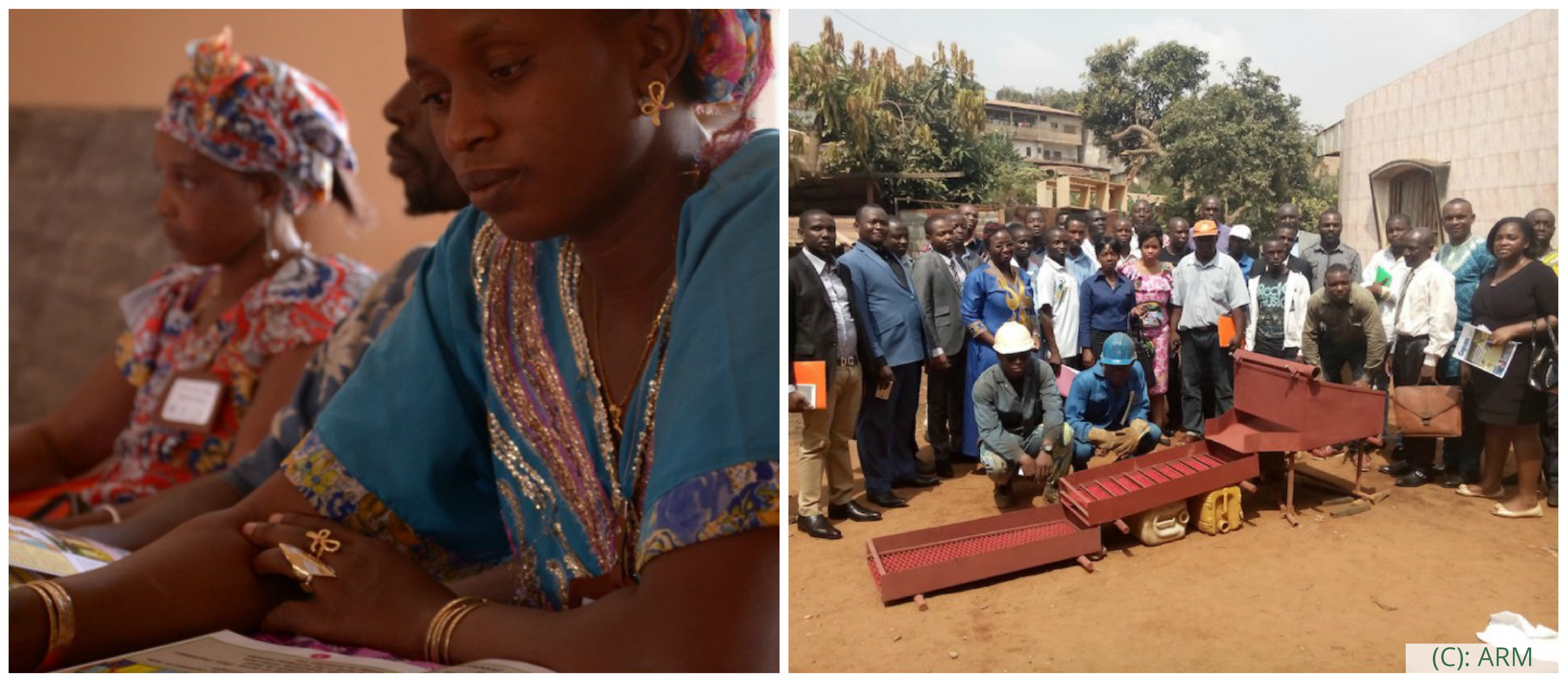
The second project, the Capacity-Building Project for the Mining Sector (PRECASEM, for its acronym in French) resulted in a pilot project to support the formalization of two mining areas in Cameroon, one in the East and another in the South of the country. After eight months of field work, this intervention concluded in January 2017 (the project itself lasted about 15 months) with the final training event, attended by about 40 people. The four main intervention topics throughout the project were: legalization of ASM organizations and mining rights; organizational structure and accounting; access to internal and external financing sources; and technical improvement, health, and work safety.
Among the very positive results of the project, one highlight is that six cooperatives are now in the declaration process and have set up an internal savings system to put towards investment in machinery and other technical materials. Furthermore, certain ASM organizations have initiated environmental reduction and rehabilitation programs, such as the transformation of minefields on alluvial plains into agricultural areas.
In light of the good results of the training, the management unit of PRECASEM has decided to invest in local consultancies to follow up on the pending actions.
Watch the video "A journey towards responsible gold in West Africa".